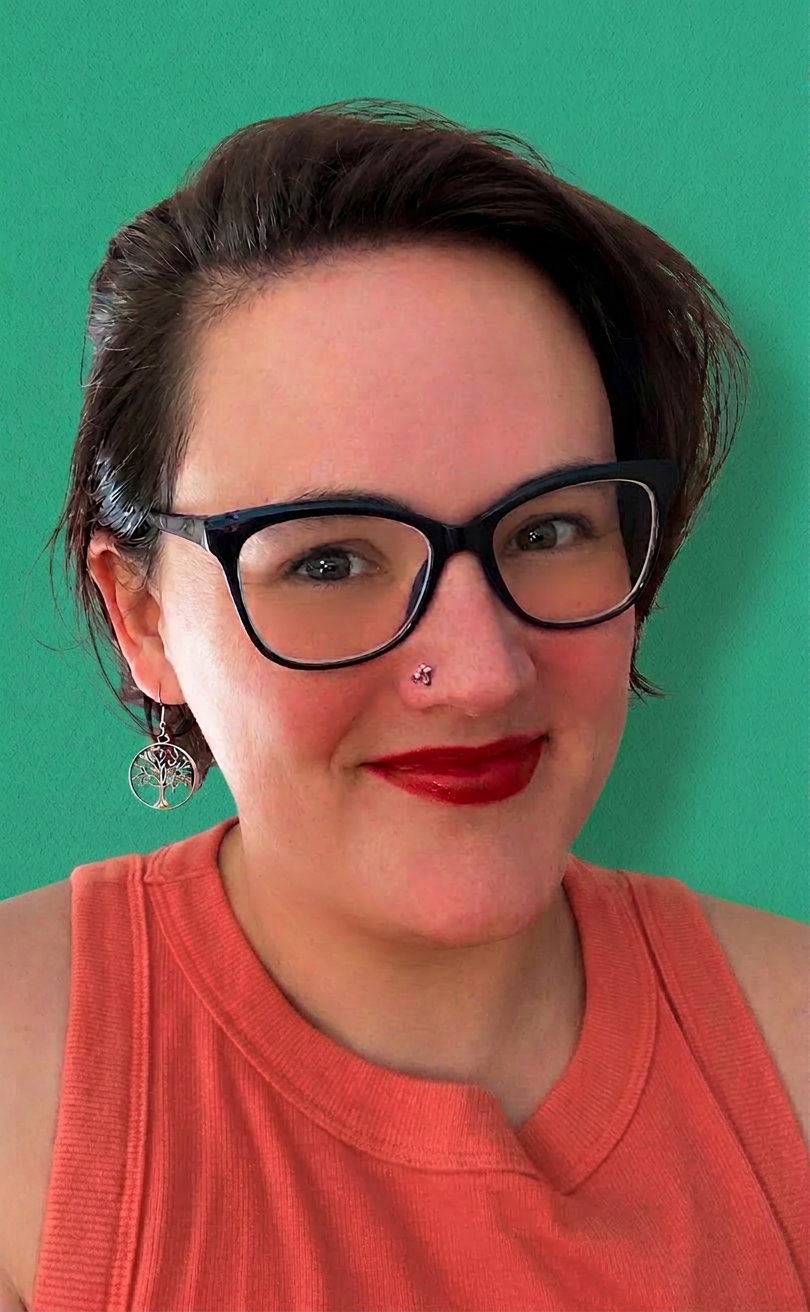
I live in Cincinnati with my husband, our daughter (4), our son (1), two cats—Sophia and Lucille—and our dog, Kona. I was born and raised in Northeast Ohio before moving to Cincinnati in 2012 after graduating from college.
My husband and I met in college when I was a freshman and he was a junior. We’ve now been together for 18 years and married for 10, which feels both impossible and completely accurate.
When I’m not teaching, I enjoy a wide variety of creative hobbies including sewing, drawing, jewelry making, reading, and creating digital content. I’m also a huge Harry Potter fan (Ravenclaw, obviously) and Luna Lovegood has always been my favorite character.
Most of all, I enjoy spending time with my family. We love exploring Cincinnati and spend a lot of time at the zoo, Kings Island, the Museum Center, and the YMCA, where I enjoy swimming with my kids and cheering on my oldest in basketball, soccer, and gymnastics.

I first started wondering whether I had ADHD when a coworker (who also had ADHD) pointed out that some of my behaviors seemed familiar. Around the same time, my sister received a later-in-life diagnosis and experienced tremendous growth and success afterward. Even then, I wasn’t convinced ADHD applied to me.
Everything changed when I began teaching in my current position at a private school serving students with learning disabilities, including ADHD and dyslexia. As I learned more about executive functioning, neurodiversity, and different learning profiles, I began seeing pieces of myself reflected in my students.
Eventually, I decided to pursue an evaluation and was officially diagnosed with ADHD in 2025 at 35 years old.
Receiving that diagnosis didn’t change who I was—it helped explain who I had always been. It gave me greater self-understanding, more compassion for myself, and a deeper appreciation for the experiences of the students and families I serve.
Today, my ADHD diagnosis shapes the way I teach: with flexibility, empathy, explicit instruction, and the belief that differences are not deficits. I strive to create a classroom where students feel understood, supported, and valued—not despite how their brains work, but because of the unique strengths they bring.